量子位官网 · 10/10/2026, 16:54:08
TypeSafe AI Raises $870M for Jev: Decision-Only Model Cuts Generation, Offers Free Output Tokens
TypeSafe AI closed an $870M Series A at a $7.5B valuation, driven by its product Jev which surged in value over 24 days. Jev redefines the LLM paradigm by stripping away text generation to focus solely on binary or multiple-choice decision-making, enabling free output tokens and ultra-low input costs ($0.042/M). This 'decision-only' architecture leverages extreme cost-efficiency to disrupt lightweight model markets.
SOURCE COVERAGEFull Original Report
Contents9 sections
Written by Wen Ting from Ao Fei Si
Quantum Bit | Official Account QbitAI
In just 24 days, the funding amount ballooned nearly 22 times, and the valuation surged 37.5 times.
The storm sparked by Jev has turned into hard cash!

Just today, TypeSafe AI, the parent company of Jev, announced the completion of an 7.5 billion (approx. ¥54.375 billion).
And what ignited all this was merely an AI model that "doesn't chat, only makes decisions"—Jev.
Its rise to fame was quite abstract: it doesn't chat or write code; instead of generating text, it chooses between yes or no.
To put it simply, it stripped away the generative capabilities of traditional LLMs to focus on one thing: making judgments.
Moreover... because the new architecture is so cost-effective that it's difficult to meter, output tokens are permanently free, while input costs only $0.042 per million tokens (approx. ¥0.3).
**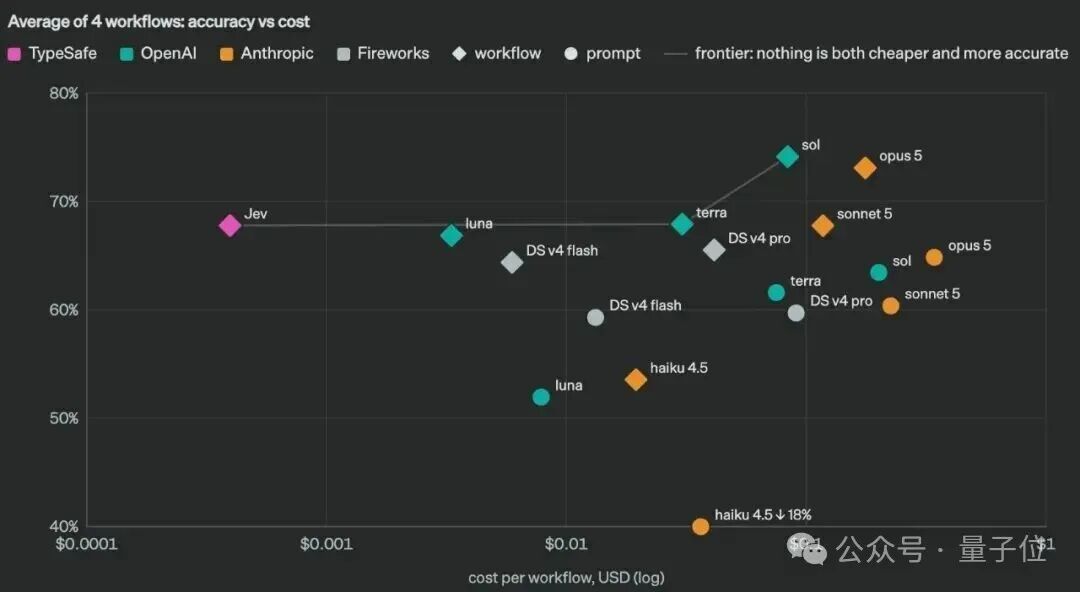
△**Let's just say every vendor's Flash models are crying in the bathroom
Even more interestingly, someone stayed up all night to open-source a "Jev Chat Assistant." It helps you anticipate your boss's expectations, figure out why your partner is upset, and generate several optimal replies for you to choose from with one click:
**
△**Image source: X @Ian (Yi'en),
This is incredibly practical.
So, what exactly is TypeSafe AI, which suddenly burst onto the Silicon Valley scene? And can the new track of "decision-making models" it pioneered actually work?
Read on to find out.

After Two Years in Hibernation, Jev Explodes into Fame, Attracting Heavy Capital Investment
TypeSafe AI was founded in 2024 and is headquartered in San Francisco.
Before Jev went viral, the company was essentially in "stealth mode" within the Silicon Valley AI circle.
Forget about industry buzz—even tweets from founder and CEO Diogo Almeida typically hovered between single-digit likes and zero.
It wasn't until September 15 of this year that TypeSafe AI emerged from stealth with its first System One model, Jev, announcing a 200 million (approx. ¥1.45 billion)**.
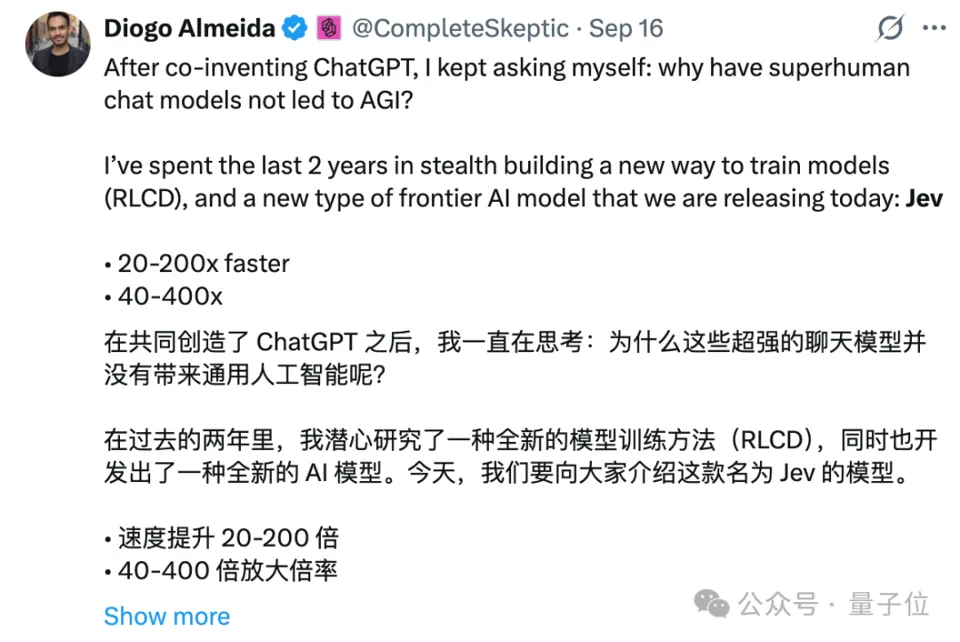
Now, as Jev goes viral across the web, TypeSafe AI's valuation has doubled accordingly.
Capital firms like a16z, Sequoia Capital, and DCVC have jumped in, pushing TypeSafe AI's valuation to $7.5 billion (approx. ¥54.375 billion).

Meanwhile, Martin Casado, a partner at top-tier Silicon Valley VC firm a16z and widely regarded as the godfather of infrastructure investing, announced he would personally join TypeSafe AI's board to participate in the company's strategic decision-making for the next phase.
The sudden influx of capital is clearly not just because Jev is trending on social media, but because its growth seems to have erupted directly from the servers.
Just 3 Days After Launch, Jev Reached a Daily Throughput of 1 Trillion Tokens
Data from Vercel shows that within 24 hours of Jev being integrated into the AI Gateway, it was adopted by nearly 13% of paying teams—more than double the adoption rate of any previous new model release—making it the fastest-adopted model in AI Gateway history.
**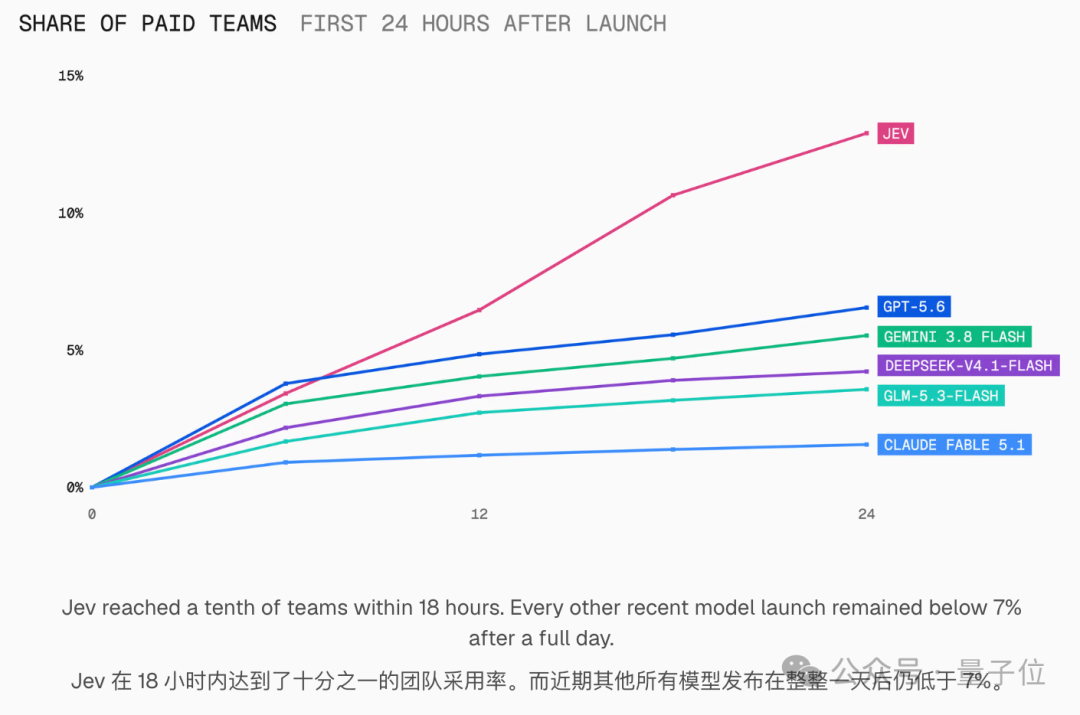
△**Image source: Vercel Blog
a16z also disclosed that Jev processed 1 trillion tokens within just three days of launch.
By the time the Series A funding was announced, TypeSafe AI stated that approximately one-third of Fortune 500 companies had begun using or integrating Jev, saving clients millions of dollars in production costs.
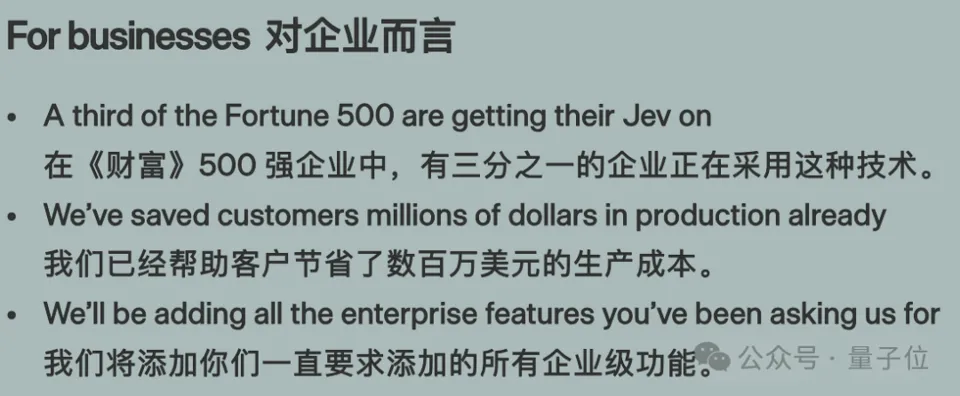
This is quite different from a chatbot suddenly going viral.
Traffic for chatbots often stems from human curiosity; users try it out a few times, and the novelty may quickly fade.
However, Jev’s high volume of calls occurs in the background: once integrated into software, it runs continuously day and night to perform classification, scoring, and decision-making.
Diogo Almeida, Co-founder and CEO of TypeSafe AI, candidly acknowledged this in an interview with Latent Space:
Our daily processing volume has already exceeded one trillion tokens, and this isn’t a fleeting peak—nighttime traffic continues to rise as well. This indicates that the majority of calls come from machine automation, not casual user experimentation.
Humans sleep, but code does not.
Perhaps this is what truly excites investors.
In its funding announcement, TypeSafe AI maintained its characteristic honest and humorous style, avoiding flowery language and simply stating their next steps: pushing what developers love to the extreme:
- Build more machine-native models;
- Complete the infrastructure required to build intelligent software;
- Add features that enterprise clients have been requesting for a long time.
Netizens couldn't help but make wishes in the comments section:
Could image capabilities please be released soon?
Diogo responded with an enigmatic "shh"
emoji;
The implication is likely that they are working hard on it. (Something to look forward to.)

The most dramatic contrast surrounding Jev perhaps comes from its creator, Diogo Almeida.
The Man Who Taught AI to Chat Now Prevents It from Speaking
TypeSafe AI’s Co-founder and CEO, Diogo Almeida, previously worked at Google Brain and OpenAI. He was a core author of the InstructGPT paper and contributed to work on RLHF, ChatGPT, and GPT-4.
In other words, he was part of the group that taught large models how to "communicate properly with humans."
But after leaving OpenAI to start his own company, he became increasingly convinced that the industry was spending too much effort making AI talk.
During the two years since founding TypeSafe AI, Diogo has consistently asked:
Models are now smart enough to write articles, generate code, perform complex reasoning, and even solve Millennium Prize Problems; But why do most critical workflows still require human confirmation when models enter real-world applications, preventing full automation?
His ultimate answer is:
Today’s AI is first trained to be a "likable assistant," rather than a component that can be stably called by software. It excels at making answers seem good to humans, but it isn’t necessarily suitable for being embedded in system backends to run automatically millions of times a day.
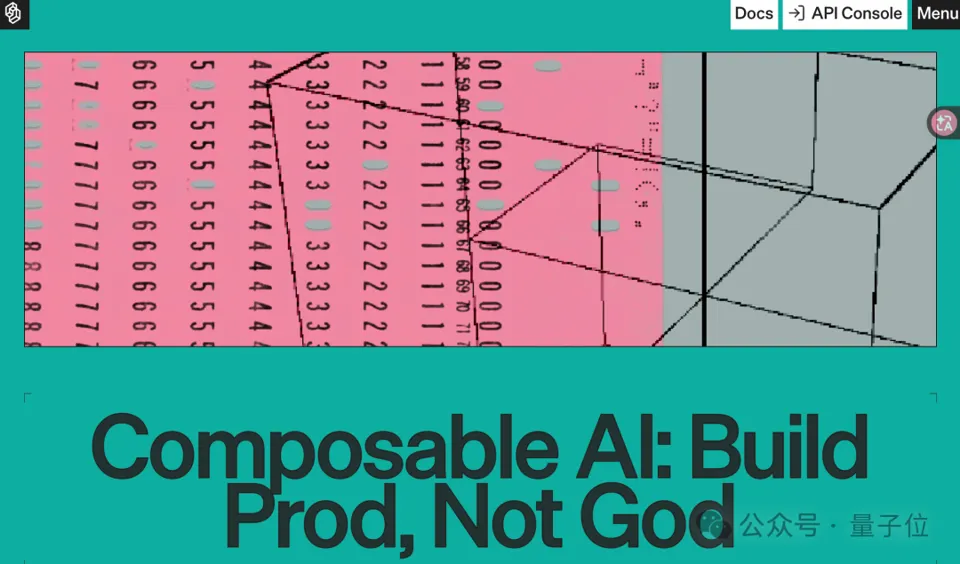
This explains TypeSafe AI’s distinctive slogan:
Build Prod, Not God.
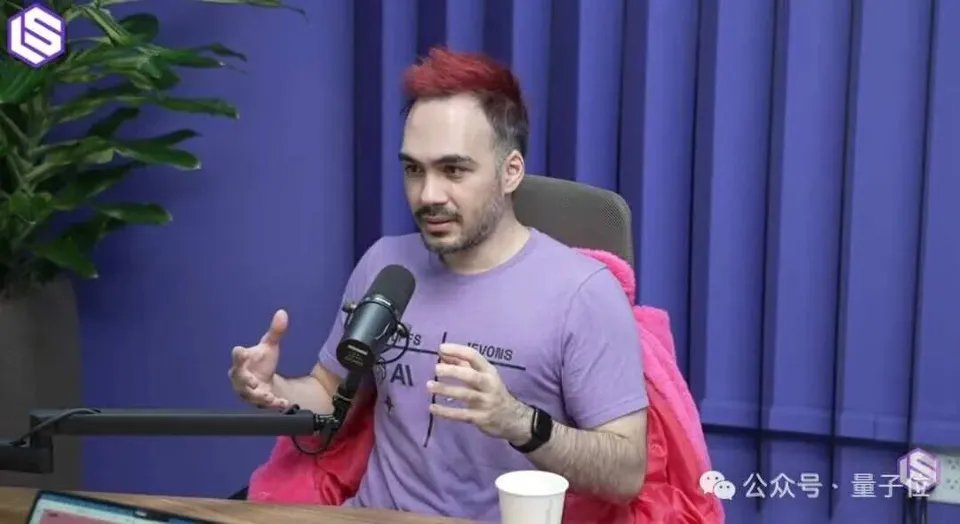
Diogo also holds little regard for the industry’s obsessive benchmarking wars, stating frankly in interviews:
I think public benchmarks are extremely easy to manipulate. Even if developers don’t actively cheat, they may ultimately be led astray by leaderboards. We have indeed faced a lack of understanding and valuation from investors because we don’t chase benchmarks, but I intend to continue doing so.
Therefore, when Jev was launched, Diogo didn’t present a wall of standard leaderboards claiming "total dominance." Instead, he directly demonstrated Jev’s practical utility, expressing hope that developers would integrate it into their own workflows to see if it could actually get the job done.
TypeSafe AI is clearly not a team hastily assembled around a rebellious slogan.
Among the other co-founders, COO Sasha Sheng hails from Meta/FAIR, having worked on News Feed, AI products, and research.
CTO Erik Gafni is a serial entrepreneur who founded Ravel, a multimodal AI company focused on DNA sequencing, and was an early employee at biotech unicorns Invitae and Freenome.
The team also includes members from renowned tech companies such as OpenAI, Google Brain, and Meta/FAIR.
They are collectively betting on a path different from "just scaling up larger models": AI might already be smart enough; what’s truly missing is an interface that allows software to confidently use it.
Jev’s success has shown Diogo and the entire "Living Room AI" industry that developers are indeed willing to pay for a different form of AI.
After wrapping everything up, Diogo posted late at night on X with a sentiment along the lines of:
We’ve been burning trillions of tokens daily, staying awake for three straight weeks—we really need to go to sleep now… (dark circles)
Unfortunately, competitors clearly have no intention of letting Diogo get a good night’s rest.
One More Thing
Just two hours after Diogo happily announced his funding news and lamented about going to sleep, Microsoft Chairman and CEO Satya Nadella entered the arena with the new decision-making model Microsoft-Decision-1.
This model is post-trained on Qwen3.5-9B, specifically designed to handle routing, classification, priority judgment, validation, and workflow control;
When facing fixed options, it assigns probabilities to each answer, supporting true/false, multiple-choice, scoring, and evaluations of AI responses and Agent behaviors.
It looks like Jev’s twin sibling—so similar!
OpenAI, of course, didn’t miss out on this hot trend either, and their move was even earlier.
On October 6th, just 21 days after Jev’s release, OpenAI launched the public beta of the Decisions API.
Powered by GPT-6 Luna, it can transform text and images into three types of structured answers: Predicate, Choice, and Score. OpenAI claims its speed can reach up to 10 times that of calling the same model via the Responses API.
Going back further, Cloudflare had already released the open-source decision models Clef and Clef-flash on October 1st. Not only are they compatible with the Jev API, but they directly placed Jev on the comparison stage.
△ Image source: Cloudflare
And all of this happened within just 24 days.
This, perhaps, is where the real value of Jev’s current funding round lies.
It didn’t just create a hit product; it made the entire industry suddenly realize that AI doesn’t necessarily need to talk more—it can also be better at staying silent and reliably doing the work in the software backend.
Once the track was established, TypeSafe AI went from having few direct competitors to facing enemies on all fronts. (TypeSafe AI: Polite, you?)
So, Diogo probably won’t be able to sleep for long…
If he wakes up in the middle of the night to check X, he’ll likely be jolted awake by the competition instantly. (doge)
Reference links: [1]https://typesafe.ai/blog/series-ai [2]https://x.com/CompleteSkeptic/status/2108594987177021737 [3]https://x.com/martin_casado [4]https://mp.weixin.qq.com/s/TYgfqz-galSfQIBgjCEvDA [5]https://vercel.com/blog/ai-gateway-jev-model-launch [6]https://developers.openai.com/api/reference/resources/decisions/methods/create [7]https://developers.openai.com/api/docs/changelog [8]https://blog.cloudflare.com/clef-decision-models/
One-click triple action: "Like," "Share," and "Star"
We welcome your thoughts in the comments!
— End —
🌟 Add to Favorites 🌟